Honoring 9/11 Heroes: A Step Toward Healing and Reflection
The memory of September 11, 2001, continues to shape the American narrative. Over the past 24 years, our communities have found increasingly creative and meaningful ways to honor those who lost their lives and the brave individuals who answered the call on that fateful day. In Pennsylvania, a visionary project is underway that not only serves as a memorial but also creates a physical connection between communities, states, and the outdoors—an endeavor that is both reflective and forward-thinking.
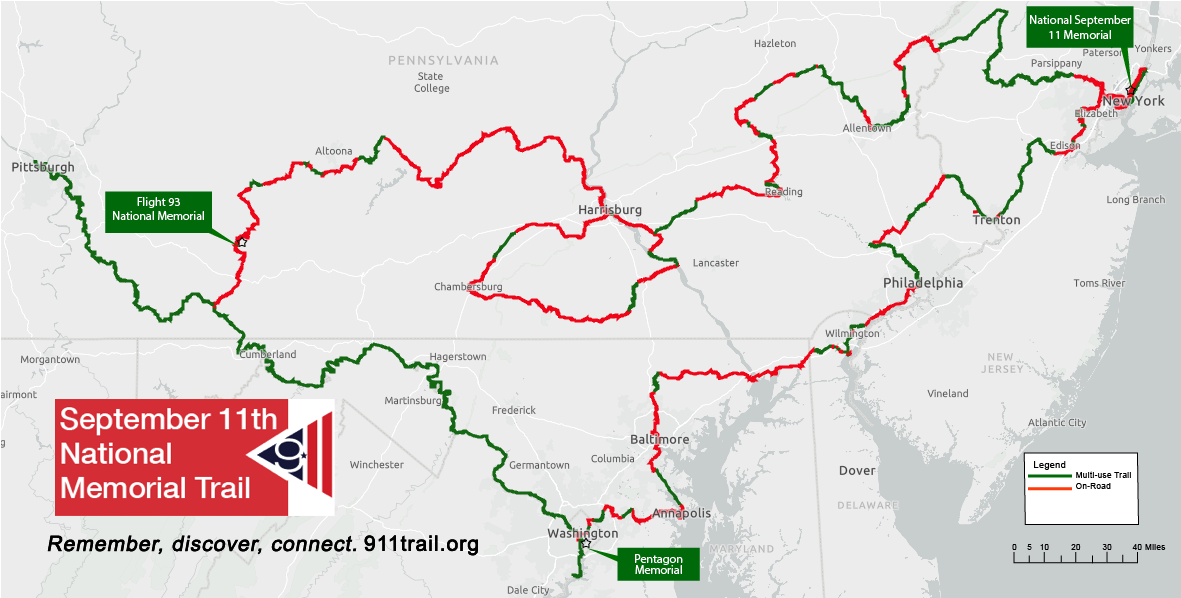
At the heart of this initiative is the 9/11 National Memorial Trail Alliance. Spearheaded by Andrew Hamilton, the project aims to complete a breathtaking walking trail that stretches from Manhattan to Somerset County and all the way down to Washington D.C. Hamilton’s goal is to establish a continuous route that will eventually link hundreds of miles of pathways connecting historic sites impacted by the events of September 11. The idea is to provide a space for people to walk, remember, and reflect amid the natural beauty of Pennsylvania and its neighboring states.
This groundbreaking effort is more than just a pathway; it is a journey through history and a tangible route for collective remembrance. Along the trail, each step serves as a tribute to the heroes, the families, and the communities that continue to live with the memory of that day. It is a project that promises to bind our shared history with the enduring spirit of resilience.
Connecting Communities Through the 9/11 National Memorial Trail
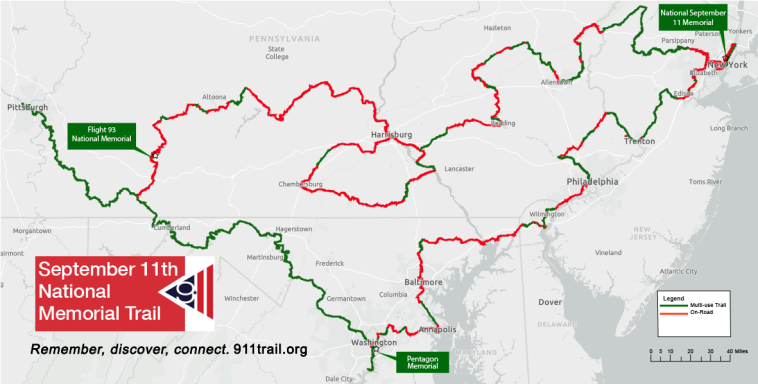
The proposed 1,500-mile network of trails will weave together sites of national memorials across Pennsylvania, New Jersey, New York, Delaware, Maryland, Washington D.C., and Virginia. For Pennsylvania alone, 903 miles of the trail will span from the southwest to the northeast. This ambitious plan not only ensures that the legacy of 9/11 is remembered but also strengthens the bond among local communities.
In Carbon and Schuylkill counties, the trail is envisioned to connect places like Jim Thorpe and the D & L Trail to the city of Pottsville. The project involves coordinating with 129 municipalities across 25 counties and collaborating with both the Department of Conservation and National Resources and the Department of Transportation. This extensive cooperation underscores the commitment from state and local governments to celebrate resilience, reflection, and unity.
The trail is poised to become a platform where history intertwines with everyday life. By providing an accessible route for residents and visitors to walk, cycle, or even jog along, it transforms remembrance into an active process rather than a static monument. It encourages interaction not just with the past, but also with nature and the great outdoors, making it an invitation for everyone to connect with the heritage of the nation.
Walking the Trail: Reflecting on History While Embracing Outdoor Recreation
Walking the proposed trail offers more than a journey of physical distance; it represents an emotional and spiritual journey through history. Every segment of the trail, whether on or off-road, is designed to evoke deep memories and provide places for contemplation. Local communities have embraced this initiative as a means to both honor the past and celebrate life in the outdoors.
The idea is rooted in the belief that nature and physically traversing a space can have a restorative effect. For many families, this trail will become a pathway to remember lost loved ones. As one board member of the 9/11 National Memorial Trail Alliance, Debby Borza, expressed, “The trail gives families like mine the opportunity to walk the path and remember our loved ones, and enjoy the beauty of Pennsylvania. It continues to serve as a place of reflection and education.”
Notably, the trail also fosters community engagement. Group walks, educational tours, and local events scheduled along the route ensure that the memory of September 11 remains alive while also building a legacy of peace, resilience, and unity. Many locals see the project as a bridge that not only spans physical geography but also connects human hearts and memories across generations.
Economic Impact and the Growth of Outdoor Recreation in Pennsylvania
One cannot discuss the 9/11 National Memorial Trail without considering its potential economic benefits for Pennsylvania. Governor Josh Shapiro has been a strong advocate for outdoor recreation, pointing to the impressive economic impact—estimated at $19 billion—from this sector across the state. Under his tenure, Pennsylvania’s outdoor industries have seen an increase of around two billion dollars, underscoring the importance of such initiatives.
The trail project is a cornerstone in a broader strategy to marry historical remembrance with economic development. During a visit to an REI store in Mechanicsburg, where Pennsylvania-based businesses were highlighted, it became clear that outdoor recreation is not only a passion project but also a robust economic engine. With nearly 9,000 outdoor recreation businesses in the state—from household names to local side projects—the creation of the trail is set to drive tourism and business activity.
In a practical sense, the trail project is expected to generate renewed interest in local businesses, community events, and regional tourism. Visitors will have the opportunity to explore small towns, dine at local eateries, and patronize small shops along the route. This symbiotic relationship between remembrance and commerce is a key reason why state leaders continue to champion the initiative.
Planning and Addressing the Tricky Parts and Tangled Issues in Trail Development
When undertaking a project of such vast scope, it is important to recognize the tricky parts involved. Coordinating 129 municipalities, managing the fine points of funding and route planning, and overcoming the little details inherent in lengthy construction projects all contribute to the challenges ahead. These are not just academic concerns; they are very real obstacles that project organizers and local governments must work through.
Some of the more complicated pieces include:
- Securing Land Rights: Finding your way through property ownership and zoning laws can be nerve-racking, especially when hundreds of municipalities are involved.
- Funding and Budgeting: Each segment of the trail requires careful allocation of resources. Billions of dollars are being funneled into outdoor recreation, and making sure these funds are spent wisely is key.
- Route Marking and Safety: With both on-road and off-road pathways, the process of marking the route to ensure the safety of hikers and cyclists involves getting into the hidden complexities of state transportation and conservation regulations.
These tricky parts form the backbone of the challenges behind the project. However, with clear communication, collaboration between state and local authorities, and a shared vision, the project is well-positioned to overcome even the most intimidating obstacles.
To illustrate how these challenges might be tackled, consider the following table that outlines some of the main issues along with potential solutions:
| Challenge | Potential Solutions |
|---|---|
| Land Rights and Zoning | Partnering with local authorities, seeking community support, and transparent negotiations with landowners |
| Budget Allocation | Leveraging public-private partnerships and state economic development grants |
| Safety and Route Marking | Collaborating with transportation departments and using modern mapping technology |
| Community Engagement | Organizing local committees and public forums to gather feedback and ideas |
The Role of Local Governments and Community Collaboration
The success of the 9/11 National Memorial Trail hinges on the willingness of local governments and community organizations to come together. The project is a shared responsibility, requiring seamless cooperation and clear communication across various levels of government. This collaboration is key to steering through the twists and turns of the planning process and ensuring that every community feels represented in the final product.
In Carbon County, along with Schuylkill County, local officials have already begun discussing the implementation of the trail in their regions. Initiatives such as connecting Jim Thorpe to Pottsville involve managing your way through tangled issues like route optimization and public safety measures. With nearly 129 municipalities involved, there is a strong consensus that what emerges will be a unifying legacy rather than a divisive project.
Many community leaders are also exploring ways to infuse local culture into the trail. For instance, several towns plan to set up small informational kiosks that detail the local history as well as the broader context of 9/11. Others envision memorial gardens and rest areas where individuals can pause, reflect, and connect with the solemn history behind the project.
Community outreach programs and public forums are critical for gathering input on the project’s fine details. By involving residents in the planning process, the organizers aim to figure a path that is truly representative of the collective memory and hopes of the people who live along the trail. This approach ensures that the final layout is both respectful and functional, meeting practical needs while preserving the sentimental value of the memorial.
History and the Outdoors: A Unique Intersection of Remembrance
The potential of the 9/11 National Memorial Trail extends beyond its role as a commemorative pathway. It represents a unique intersection where history meets outdoor recreation, creating opportunities for reflection, education, and community bonding. Walking the trail allows participants to take a closer look at the events of the past while experiencing the rejuvenating influence of nature.
For many, the idea of combining a memorial with an active, outdoor experience is powerful. The trail not only offers a chance to remember the past but also highlights the beauty of Pennsylvania’s landscapes. In doing so, it makes the act of remembrance an immersive experience. People can physically feel the connection between historical events and contemporary life by engaging with the outdoors in such a personal way.
Outdoor educators and local historians alike have celebrated this design, noting that the physical journey complements the emotional and intellectual exploration of history. Small plaques along the route detail the significance of various sites, while interactive exhibits offer insights into the events of 9/11 and their lasting impact.
This approach transforms a simple walk into an educational journey. Visitors are encouraged to pause at designated points, dive in to learn more about the local history, and share in collective memories. In this way, the memorial trail transcends traditional static monuments, fostering a living, breathing narrative that continuously evolves with each visitor’s experience.
Trail Safety and Design: Ensuring a Secure and Enjoyable Experience
While the historical and economic implications of the project are profound, safety and design remain core priorities. With both on-road and off-road segments integral to the trail, ensuring that visitors have a safe and enjoyable experience is super important. Visibility, proper signage, and accessible route designs are key factors in achieving this goal.
Local and state agencies are working together with experts from transportation, conservation, and public safety to figure a path that minimizes potential hazards. For those concerned about encountering confusing bits or off-putting challenges along the route, multiple layers of safety measures are being implemented:
- Enhanced Signage: Clear markers at key intersections and trail segments will help visitors stay on track.
- Rest Areas and Emergency Points: Strategically placed stops allow for rest, information, and rapid response if emergencies occur.
- Routine Maintenance: Regular inspections and maintenance schedules will ensure that the trails remain safe and accessible.
- Community Safety Programs: Local volunteers and law enforcement will coordinate to provide extra security during large events and peak usage times.
These efforts are designed to make the trail not only a site of reflection and remembrance but also a viable route for daily outdoor activities. With multilayered safeguards in place, the trail promises to be both a respectful memorial and a functional recreational pathway.
Economic and Social Benefits That Stretch Beyond the Trail
The benefits of the 9/11 National Memorial Trail extend well beyond the realm of historical remembrance. Economically, the project is set to boost local businesses and generate new job opportunities. Retail shops, local food vendors, and small enterprises will likely see increased patronage as tourists and local visitors explore the trail.
The following bullet list highlights some of the key economic and social benefits:
- Tourism Growth: As the trail garners national attention, more visitors will flock to the region, contributing to local hospitality and retail sectors.
- Small Business Support: The influx of tourists will provide a boost to local markets, restaurants, and craft shops.
- Job Creation: Construction, maintenance, and tourism-related jobs will likely grow in tandem with the development of the trail.
- Enhanced Community Cohesion: By creating a shared space of remembrance and recreation, the project builds a bridge between diverse communities and fosters mutual support.
Socially, the trail represents a public space that encourages fitness, education, and healing. Events such as group walks, guided historical tours, and outdoor festivals create opportunities for community bonding. In an age of digital communication and isolated living, physical spaces that facilitate real-world connections are both refreshing and necessary.
These multifaceted benefits underscore how a project that started as a memorial endeavor has blossomed into a beacon for economic development and community wellbeing. By interweaving remembrance with active participation, the trail transforms historical loss into a foundation for future growth.
The Intersection of Public Lands and Environmental Stewardship
Governor Shapiro’s broader push to elevate outdoor recreation in Pennsylvania also entails a commitment to environmental stewardship. The outdoor sector, which is layered with challenges such as funding cuts, policy rollbacks, and the impacts of climate change, remains on edge. Leaders like REI’s CEO and President Mary Beth Laughton have highlighted that public lands provide us with an invaluable space to breathe, restore, and bond with one another.
In light of these issues, it is essential that the development of the trail aligns with sustainable practices. Collaborations among the Department of Conservation and National Resources, the Department of Transportation, and local municipalities are taking into account the long-term environmental impact of the project. Eco-friendly practices such as using recycled materials for signage, sustainable landscaping near the trail, and promoting the use of non-motorized transport are gaining traction.
Environmental stewardship and economic growth are not mutually exclusive. By embracing responsible practices, the project illustrates how safeguarding nature benefits both the environment and the local economy. The trail serves as a model for how historical remembrance and outdoor recreation can coexist in a way that respects natural landscapes while fostering community engagement.
This balanced approach helps ensure that the trail not only honors the past through remembrance but also protects the future by encouraging sustainable interactions with our public lands. It is a clear demonstration of the state’s commitment to creating a legacy that is both respectful and forward-thinking.
Community Voices: Stories of Reflection, Perseverance, and Hope
No effort to build a memorial of this magnitude can succeed without the input and passion of local residents. In the months leading up to the 25th anniversary of 9/11, community meetings and public forums have brought together people from diverse backgrounds to share their stories, hopes, and ideas for the trail. It is in these gatherings that the true spirit behind the project is revealed—a shared sense of purpose to honor the past while charting a hopeful future.
For many, the trail will be more than just a route; it will be a space for healing and community dialogue. Residents have expressed their thoughts in various ways:
- Reflective Walks: Families and individuals who have lost loved ones walk together, turning the path into an emotional journey that binds them through shared experience.
- Educational Events: Schools and local historians plan to organize guided tours that dive in to explore the historical context of each significant marker along the way.
- Community Celebrations: Local festivals and remembrance events will be held in conjunction with the trail’s milestones, fostering unity and mutual support.
These voices speak not only to the importance of remembrance, but also to the power of community in overcoming the small twists and complicated pieces that can arise from tragedy. Every story, every shared memory on the trail reinforces the idea that while the events of September 11 have indelibly shaped us, our response—marked by resilience, hope, and cooperation—continues to define our collective identity.
Looking Ahead: Future Steps Toward a Lasting Legacy
As the 9/11 National Memorial Trail continues to take shape, numerous questions and challenges remain. Will every municipality be able to finalize its segment of the trail in time for the 25th anniversary? How will funding and safety measures keep pace with the ambitious expansion of the route? While these are undoubtedly nerve-racking and, at times, overwhelming prospects, the commitment from leaders and community members is steadfast.
The road ahead involves a careful balancing act between tradition and innovation. State officials, under the guidance of figures like Gov. Josh Shapiro, remain dedicated to ensuring that by next September, the full 903 miles in Pennsylvania will be secured. This vision relies on open dialogue, coordinated efforts, and a belief that when communities work together, even the most intimidating obstacles can be overcome.
Looking to the future, some key milestones include:
- Finalization of Route Segments: Each county is working diligently to mark and secure its portion of the trail, with an eye toward a fully connected pathway.
- Enhanced Funding Initiatives: Public-private partnerships and state grants continue to serve as the financial backbone for the project, ensuring that resources are available during the various phases of development.
- Ongoing Community Engagement: Continuous feedback from local residents ensures that the trail remains a true community asset, with adjustments made as needed to address evolving concerns.
- Sustainability and Safety: Future planning includes the integration of eco-friendly materials and advanced safety protocols to guarantee that the trail endures as a secure and pleasant experience for all users.
Each of these milestones represents not just a step forward in construction, but also a step toward preserving the legacy of September 11 for future generations. Even as the trail takes shape physically, its impact is already being felt in communities across the region—a testament to the enduring power of remembrance and the healing influence of the outdoors.
Conclusion: A Journey of Remembrance, Unity, and Hope
In embarking on the bold mission of creating the 9/11 National Memorial Trail, Pennsylvania and its neighboring states are undertaking a project that is as much about economic and community development as it is about remembrance. This memorial trail serves as a symbol—a physical manifestation of our collective commitment to honor those who were lost, celebrate the heroes who risked everything, and build a future where history is not forgotten but lived and understood in every step we take.
The path ahead may be filled with tricky parts, tangled issues, and nerve-racking challenges, but the project’s success rests on the strength of community collaboration, government support, and a shared belief in the healing power of the outdoors. By making your way through the complex bits of planning with open hearts and determined minds, Pennsylvania is demonstrating that remembrance is not just about looking back, but about forging ahead with unity and hope.
As we step into a future enriched by both economic growth and a deeper understanding of our past, the 9/11 National Memorial Trail stands as a beacon. It is a must-have destination for those who seek a journey that interweaves history, natural beauty, and community resilience—a living tribute to one of the most pivotal moments in our nation’s history, and a pathway toward healing and unity for generations to come.
Originally Post From https://www.tnonline.com/20250915/the-9-11-trail-will-provide-reflection-and-revenue/
Read more about this topic at
Trail of Remembrance | Canandaigua, NY
Trail of Remembrance and Comradeship