Understanding the Proposed Land Sale in Colorado
The recent proposal included in the Big Beautiful Bill budget plan has stirred up a lively debate around Colorado’s public lands. According to the bill, more than 14 million acres of public lands—ranging from scenic byways and popular trails to wildlife habitats and areas adjacent to major ski areas—could be sold over the next five years. The idea is to generate between $5 billion and $10 billion for the government, while simultaneously addressing local housing needs. It is important to understand that this proposal covers land managed by the Bureau of Land Management (BLM) and the Forest Service, yet leaves areas like national parks, monuments, and designated conservation areas untouched.
Advocates of the proposal argue that selling these lands would open the door for much-needed development, particularly in the housing sector. Critics, however, warn that the sale could disrupt recreational, environmental, and community interests. In the upcoming sections, we will take a closer look at the proposal, using common everyday language to clarify the tricky parts and tangled issues behind the plan.
Historical Context and Background on Public Land Sales
Public land debates are not new in the American West. The tension between conserving natural spaces and promoting development has been a recurring theme in Colorado’s history. The current updated bill builds on past discussions that have seen multiple attempts to repurpose underused lands for economic benefit. With federal agencies like the BLM and the Forest Service holding vast tracts of land, the idea of converting some of this land into assets that can stimulate local economies is an appealing concept to many lawmakers.
It is critical to note that while the proposal sets aside lands for specific purposes—namely housing and related infrastructure—the usage restrictions on those lands disappear after 10 years. This means that while initial development might be directed toward residential and community needs, the long-term future of these areas remains uncertain.
This development raises several questions. For instance, what are the hidden complexities of changing federal land policies? Are the current protections enough to ensure that recreational spaces and environmental assets remain intact? By taking a closer look at these questions, we can better understand both sides of the issue.
Key Features of the Bill and Its Implications
The revised version of the bill has removed several prior restrictions, thereby broadening the eligibility of federal lands for potential sale. Here are some of the critical details:
- The proposal only mandates the sale of land managed by the BLM and the Forest Service.
- Certain protected areas, such as national parks, national monuments, wilderness study areas, and critical environmental zones, are exempt from the sale.
- After accounting for these exemptions, approximately 14 million acres in Colorado are potentially on the market.
- Notably, initial provisions that exempted land with grazing leases were removed in later revisions.
These bullet points illustrate the fine points of the proposal. When you examine the bill’s structure, it becomes apparent that the restrictions on land use are designed to encourage only a narrow range of development—primarily housing. Yet, the lack of a requirement for affordable housing or community consultation raises some considerable questions. In addition, open access to the easiest-to-access lands around population centers means that communities could see a swift transition in how these lands are used over time.
Recreational and Environmental Impacts
Public lands in Colorado are renowned for their scenic vistas, outdoor recreation opportunities, and rich wildlife habitats. Many of these areas are adjacent to or within a short drive of popular cities and towns, making them valuable not just for locals but also for tourists from across the country. With over 26 scenic byways and other natural treasures dispersed throughout Northern Colorado, the proposed land sales could have a direct effect on outdoor recreation and tourism.
Recreation enthusiasts express concern that the sale might pave the way for the construction of residential communities at the expense of outdoor spaces. This would potentially lead to:
- Reduced opportunities for traditional outdoor activities like hiking, skiing, and bird watching.
- Potential conflicts over land use as private developers may prioritize profit over conservation.
- A loss of pristine natural landscapes that have been critical for both mental and physical wellbeing.
While some argue that development could bring improved infrastructure and better-maintained trails (once backed by housing developments and additional revenue), skeptics point out that private interests might not value public access and natural beauty as highly as local residents or conservation groups. These subtle details in land management policies highlight the need for community voices to be heard in the legislative process.
Housing Development: Opportunities and Overwhelming Challenges
The projected sale of public lands has frequently been pitched as a solution to the housing crisis in many communities. The idea is that by unlocking new lands for residential and commercial use, local economies will receive a much-needed boost. However, there are several challenging bits that one must consider:
- Infrastructure Requirements: The land being sold is chosen partly for its proximity to existing infrastructure. However, transforming federal lands into neighborhoods is a complicated process that involves significant investment in roads, public services, and utilities.
- Affordability Concerns: The bill currently does not mandate that new housing must be affordable. As a result, the risk that such developments could cater to high-income buyers or investors is very real, leaving many local residents behind.
- Community Impact: Changes in land use can lead to rapid shifts in community character, potentially displacing long-term residents or altering the local culture that relies on a balance between nature and urban expansion.
These points illustrate the many tangled issues that communities, developers, and lawmakers must figure a path through to ensure that housing development is sustainable and inclusive. As local governments weigh the potential revenue against community needs, the future of these lands—and by extension, the character of Colorado’s neighborhoods—remains uncertain.
Environmental Considerations and Protection of Natural Assets
The public lands in Colorado are not only key to recreational and economic opportunities, but they also serve as vital components of the state’s environmental system. The lands include diverse ecosystems, wildlife corridors, and critical habitats that are essential for biodiversity. When considering a sale of these lands, there is a natural concern that commercial development could disrupt delicate ecosystems.
Potential environmental impacts include:
- Loss of Wildlife Habitats: The conversion of federal lands to developed areas may break up wildlife corridors, making it more difficult for species to migrate or find safe habitats.
- Degradation of Natural Resources: Increased construction and population density can lead to soil erosion, water quality issues, and a reduction in overall natural resource availability.
- Long-Term Ecological Shifts: Once development begins, long-standing environmental patterns can shift in ways that may not become apparent until years later.
Conservation advocates argue that while the revenue from land sales is immediately attractive, the long-term environmental costs could be overwhelming. There is a fear that once the battle lines are drawn, reversing the environmental degradation may prove impossible. For many, the risk of losing treasured parts of Colorado’s natural heritage outweighs the potential economic benefits.
Mapping the Eligible Lands: Visual Insights into the Proposal
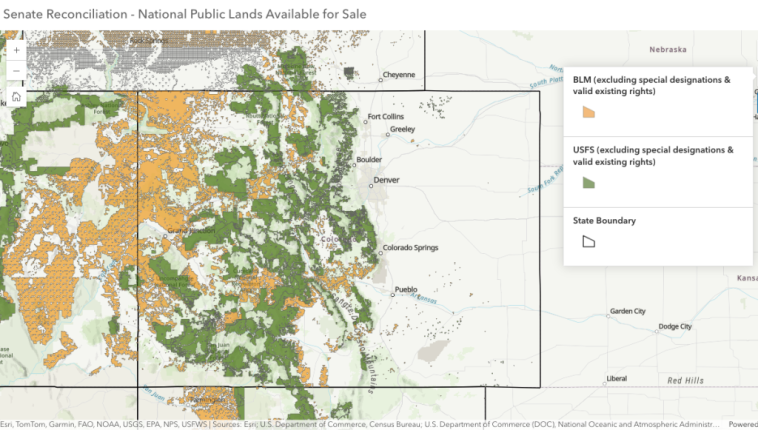
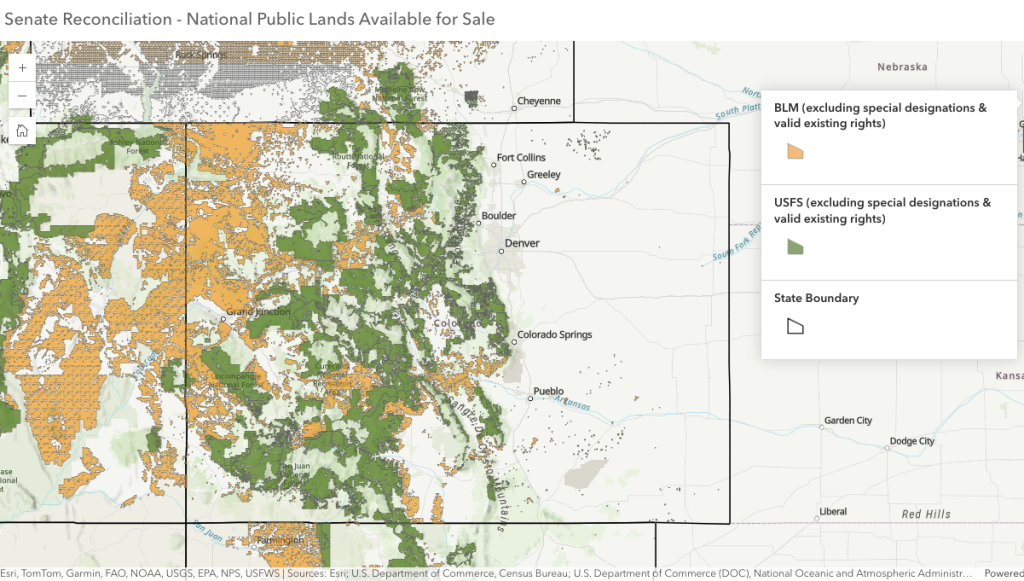
A useful tool that has emerged amid this debate is the map created by environmental organizations like the Wilderness Society. This map highlights the specific regions and landmarks that could potentially be sold under the revised proposal. Not only does it serve as a visual guide, but it also underscores some of the more extreme examples of land that might be affected, including ski resorts on national forest lands like those at Vail and Copper Mountain, as well as the Lunch Loops near Grand Junction.
The map provides clarity on areas such as:
- The locations of major recreational areas on national forest lands.
- Proximity to population centers where the land is most accessible and likely to be sold.
- Critical environmental sites that might be on the borderline of eligibility under the revised criteria.
These visual representations help stakeholders—both local residents and policymakers—get a push around the fine points of the proposal. They expose where the land is not only scenic but also commercially appealing, which may accelerate the pace of development if the bill is fully enacted. The map is a well-needed starting point for community discussions and legislative debates alike.
The Role of Federal Agencies and Public Land Management
The Bureau of Land Management and the Forest Service are both at the heart of this controversy. Collectively, these agencies manage hundreds of millions of acres across the nation while balancing diverse mandates. On one side, they are charged with conserving natural, historical, and cultural treasures; on the other, they are expected to support multiple uses, including energy development, recreation, and now, potentially, housing expansion.
Let’s review the main responsibilities of each agency to understand the tangled state of affairs:
| Agency | Managed Assets | Main Responsibilities |
|---|---|---|
| BLM | Approximately 245 million surface acres | Supports multiple uses including renewable energy development, livestock grazing, mining, and outdoor recreation while conserving natural resources. |
| Forest Service | About 193 million acres of national forests and grasslands | Promotes sustainable forest management, combats wildfires, and prioritizes conservation and recreation services. |
This table sums up the nitty-gritty details of what these agencies oversee. Their roles are critical in balancing the competing needs of community development, environmental protection, and recreational opportunities. The prospect of selling parts of these lands raises the question of whether long-standing government priorities can adapt to rapid changes in land use, without sacrificing the region’s natural legacy.
Local Community Perspectives and the Future of Colorado’s Landscape
Across Colorado, community leaders and local residents are divided in their opinions regarding the proposed public land sale. Many on the ground believe that unlocking federal lands for development could stimulate much-needed growth and contribute to solving the housing shortage. For these supporters, the proposed sales are an innovative way of getting around what they see as overly strict land management by Washington, D.C., that sometimes hinders local growth.
However, other residents worry about the off-putting impacts of rapid development. Among the community’s major concerns are:
- Loss of Public Access: Once the land is privatized, there is a real risk that access to trails, picnic areas, and other recreational venues could be severely restricted.
- Change in Cultural Identity: Many outdoor enthusiasts and local historians feel that the character of Colorado is exactly tied to its vast, open spaces. Selling off public land may erode this identity over time.
- Economic Uncertainty: While the bill forecasts revenue gains in the billions, critics emphasize that this money might not translate into community benefits like improved local infrastructure or expanded public services, particularly if development primarily caters to affluent buyers.
Community town hall meetings, public comment sessions, and local media have all been abuzz with discussions on these points. The balance between economic development and preserving the state’s natural heritage is indeed a nerve-racking tightrope to walk, and many locals worry about potential unintended consequences.
Economic Prospects and Funding: A Closer Look
Proponents of the bill believe that the sale of public lands can unlock unprecedented financial opportunities. The projected revenue—between $5 billion and $10 billion—could be channeled into infrastructure, community development projects, and perhaps even efforts to mitigate the environmental impacts of development. However, there are a few tricky parts that deserve further discussion:
- Revenue Allocation: There is a great deal of uncertainty about how the funds derived from such sales would be distributed. Questions persist over whether local governments would gain a substantial share or if the money would predominantly end up in federal coffers.
- Short-Term vs. Long-Term Gains: While immediate revenue is appealing, there is concern that the long-term economic benefits might be offset by the loss of ecosystem services—services that include clean water, air purification, and opportunities for eco-tourism.
- Impact on Local Businesses: For businesses that rely on outdoor recreation and tourism, changes in land availability could have immediate economic consequences. It is essential to consider both the possible upsides of increased housing and the potential downsides related to reduced natural attractions.
Economic analysts suggest that while the idea of funneling money back to develop local infrastructure is enticing, there are many subtle details that need to be worked out. As communities wait to see detailed plans on how the revenues would be reinvested, the issue remains a highly debated topic. The public deserves transparent decisions that spell out the tangible benefits and possible risks associated with this sweeping proposal.
Political and Legislative Dynamics at Play
The political context of the bill is equally significant as its economic or environmental aspects. The proposal was led by Republican Sen. Mike Lee of Utah, who emphasized that opening underused federal land could help support local growth without the heavy-handed interference of federal regulators. This narrative resonates strongly with segments of the population who feel that the central government should enable local communities to manage their own land resources more freely.
However, critics point out that while the goal of reducing federal oversight might seem appealing, there are also hidden risks. For example, without specific restrictions placed on housing affordability, the transformation might favor high-end developments instead of serving the broader public need. Moreover, experts worry that once the parade of land sales begins, it will be challenging to reverse the cumulative effects over time.
Political analysts have long noted the unpredictable twists and turns of federal land policy, especially in a state like Colorado where public sentiment can be particularly off-putting when it comes to changes in environmental stewardship. The bill’s passage, amendments, and potential enactment are likely to be a drawn-out process, with ample opportunities for public intervention and debate. As the legislative session continues, all eyes will be on both local officials and federal agencies to see how these policies will be shaped and implemented.
Balancing Development with Conservation: A Multi-Faceted Challenge
Finding a balanced path forward is essential for a state as diverse as Colorado. On one side, there is the super important drive to develop housing and infrastructure that can support growing populations and stimulate economic activity. On the other, the undeniable value of conserved lands as hubs for recreation, environmental protection, and cultural identity cannot be understated.
This balancing act involves several layered challenges:
- Environmental Sustainability: Development must incorporate sustainable practices, ensuring that wildlife and natural resources are preserved while new housing projects advance.
- Infrastructure Overhaul: Current plans must account for the additional burden on services like transportation, water, and electricity that would come with new developments.
- Community Engagement: Local residents need to have a say in how their land is used, fostering policies that respect both heritage and future growth.
To manage these conflicting needs, communities should consider strategies such as:
- Establishing local advisory boards to work closely with developers and lawmakers.
- Integrating environmental impact assessments as a necessary part of any sale and development plan.
- Ensuring that a portion of the revenue goes toward mitigating any negative environmental effects.
By working through these issues together, community leaders, environmentalists, and policymakers can find common ground, ensuring that development does not come at the expense of Colorado’s cherished outdoor spaces.
Learning from Other Western States: Comparative Insights
Colorado is not the only Western state evaluating changes in public land use. Similar proposals have surfaced in several states, prompting comparisons that help sort out which approaches might work best and which could lead to unforeseen problems. For example, in the broader Western region, more than 250 million acres of federally managed land have been nominated for possible sale under similar proposals. The experiences of other states provide critical insights into both the promise and perils of such a policy.
Looking at these examples, a few key takeaways emerge:
- Regulatory Oversight: States with stringent oversight over land use changes have generally managed to preserve natural resources better, though they sometimes struggle with the pace of economic development.
- Revenue Distribution: Where there is clear legislation on how funds are earmarked for community benefit, residents often report better outcomes and higher satisfaction with the process overall.
- Public Participation: Successful models involve robust community input at every step, ensuring that both environmental and economic factors are fully considered.
This comparative approach demonstrates the importance of learning from others who have experienced similar challenges. While Colorado might be tempted by the revenue potential and development opportunities, the lessons from neighboring states caution against hasty or unbalanced decisions.
Future Outlook: What Lies Ahead?
As the legislative process unfolds, several questions remain open for debate and discussion. One of the most pressing is the long-term nature of the proposed changes. With usage restrictions on the land set to expire after 10 years, stakeholders must consider what the landscape might look like down the road. Will newly developed areas eventually be transformed into commercial hubs, or can there be a balanced coexistence of residential areas with cherished natural spaces?
Some of the foreseeable issues that call for a closer look include:
- The restructuring of land management policies at both state and federal levels.
- The possibility of new legislation that might impose stricter guidelines on post-sale land use.
- The need for a long-term commitment from local authorities to reinvest revenue from public land sales into community projects.
In the coming years, continuous engagement with all stakeholders will be critical. The conversation is likely to be ongoing, with community meetings, public hearings, and legislative revisions all playing a part in shaping the final roadmap for Colorado’s public lands.
Community Dialogue: How Local Voices Can Shape Decisions
The future of Colorado’s public lands depends significantly on active participation from local communities. It is not just a matter of economics or environmental policy—it’s also about identity, heritage, and a shared vision for the state’s future. Community members, whether they are residents, business owners, or outdoor enthusiasts, need to get into discussions on how these lands should be used. Some practical steps for community engagement include:
- Attending town hall meetings and public hearings.
- Participating in local surveys and engaging with state representatives.
- Collaborating with environmental advocacy groups to voice concerns and propose balanced solutions.
Such efforts will be critical in steering through the maze of decisions that lie ahead. When local voices are heard, there is a greater chance that the final policies will reflect a consensus that values both economic growth and conservation. This kind of proactive involvement ensures that the narrative surrounding the public lands remains inclusive and balanced.
Addressing the Tricky Parts of Land Sales: A Look at the Fine Details
It is unmistakable that a proposal of this scale comes with several complicated pieces. The debate over which lands would eventually be sold versus those that remain protected is a clear example of where debates become on edge. Let’s examine some of these challenges in a bit more detail:
- Exemption of Protected Areas: Although many areas such as national parks and monuments are exempt, the shifting nature of the bill means that some regions that many would assume are safe might not be. The precise delineation of these lands remains a subject of heated debate.
- Economic Pressure vs. Environmental Value: The pressure to generate immediate revenue by selling land often overshadows the long-term benefits provided by intact ecosystems. The balance between short-term gains and long-term sustainability is one of the most nerve-racking aspects of this proposal.
- Future Land Use Restrictions: With the restriction on housing or related infrastructure dropping after a decade, communities must consider how land use policies will evolve over time. This poses a new set of tangled issues that must be considered as part of any long-term strategic planning.
By breaking down these tricky parts into smaller components, local communities and policymakers can start to develop frameworks that address each issue systematically. Transparency and continuous dialogue will be essential in coming to grips with these hidden complexities.
Weighing the Pros and Cons: A Balanced Outlook
In weighing the pros and cons of the proposed land sales, it is critical to approach the issue with a clear, unbiased perspective. Let’s consider the main benefits and pitfalls side by side:
| Potential Benefits | Potential Pitfalls |
|---|---|
|
|
This table provides a straightforward look at the main arguments on either side. The benefits and pitfalls are both significant, and decisions made now will have lasting effects on Colorado’s future. The key is finding a middle ground that maximizes the advantages while mitigating the risks.
The Importance of Ongoing Oversight and Review
Given the scale of the proposal and the potential for far-reaching impacts, there is a strong call for ongoing oversight. An independent review process that involves experts in natural resource management, urban planning, and community development could prove super important in monitoring the outcomes of any land sales.
Proposals for such oversight include:
- Regular audits by state and federal agencies to monitor compliance with usage restrictions.
- Establishment of a community review board consisting of local residents, environmentalists, and industry experts.
- Periodic updates to the public on the state of development and environmental health in the areas affected.
Implementing these measures could help ensure that the process remains fair and that any adverse impacts are promptly addressed. In turn, this continued scrutiny can build trust between the public and government agencies responsible for managing public lands.
Conclusion: A Crossroads for Colorado’s Public Lands
In conclusion, Colorado stands at a crossroads. The proposed sale of more than 14 million acres of public land presents a mixture of promising opportunities and nerve-racking uncertainties. On one hand, there is the hope of revitalizing local economies and addressing pressing housing needs. On the other, there is the deeply held value of preserving the state’s unique natural legacy—a legacy that encompasses well-trodden trails, breathtaking scenic byways, and wildlife habitats that form the backbone of the community’s identity.
The discussion is rife with tricky parts and tangled issues that require community input, careful consideration, and innovative policy frameworks. With recommendations ranging from stricter oversight to enhanced community engagement, the debate is likely to continue long after the current legislative session. As Colorado’s lawmakers and residents figure a path through these complicated pieces, the ultimate challenge will be to strike a balance that honors both economic progress and the cherished natural world.
Ultimately, the decision on how to manage these lands will not simply be a financial or political one; it will be a reflection of the values that Coloradans hold dear. Whether the future sees expansive new neighborhoods or a more sacred preservation of open space, one thing is clear: the outcome will have a lasting impact on Colorado’s legacy, shaping the state’s character for generations to come.
Originally Post From https://www.coloradoan.com/story/news/local/colorado/2025/06/19/federal-public-land-colorado-blm-usfs-sale/84268596007/
Read more about this topic at
Millions of acres of public land in Colorado, other Western …
Here’s which Colorado public lands could be sold under …